

schedule your consultation865-281-1000

What Should UT Students Know About Search and Seizure Rights?
 As a student at the University of Tennessee, you have the same constitutional rights as any other citizen. The Fourth Amendment to the U.S. Constitution protects everyone in this country from unreasonable searches and seizures by government officials. That protection applies whether you are in your dorm room, in your car, or walking across campus. But knowing your rights and knowing how to protect them in real time are two different things. If you are a UT student facing criminal charges that started with a search in 2026, a Union County, TN criminal defense lawyer can help you understand whether your rights were violated and what can be done about it.
What Does the Fourth Amendment Actually Protect You From?
The Fourth Amendment protects you from unreasonable searches and seizures by government agents. In practical terms, this means that police generally cannot search your person, your belongings, your car, or your living space without either a valid warrant or a recognized legal exception. If a search is conducted without a warrant and no exception applies, the evidence found during that search may be thrown out of court.
The keyword is "unreasonable." Not every search requires a warrant, but every warrantless search has to be justified by a specific legal exception. Understanding what those exceptions are helps you know when a search is lawful and when it is not.
Do Your Fourth Amendment Rights Apply in a Dorm Room?
Courts have recognized that students have a reasonable expectation of privacy in their dorm rooms. That means police generally need a warrant to search your room without your consent. Your dorm room is your home for the time you live there, and the law treats it similarly to any other residence.
However, there are important limits. If you consent to a search, no warrant is needed. If police have a valid warrant, they can search without your consent. And if there are exigent circumstances, meaning an emergency that requires immediate action, police may be able to enter without a warrant.
University officials, such as resident advisors or housing staff, operate under different rules than police. Searches by university officials are generally held to a lower standard than searches by law enforcement. A university may be able to conduct an administrative search of your room under its housing policies without the same Fourth Amendment restrictions that apply to police.
Can Police Search Your Car on or Near the UT Campus Without a Warrant in Tennessee?
Vehicles have a lower expectation of privacy than homes under Fourth Amendment law. Police can search your car without a warrant if they have probable cause to believe it contains evidence of a crime. They can also search your car if you consent to the search or if you are lawfully arrested and the search is related to that arrest.
One of the most common situations UT students face is being pulled over near campus and asked if police can search the vehicle. You have the right to say no. Saying no is not an admission of guilt. It is the exercise of a constitutional right. If police search your car anyway without a valid reason, that search may be challenged later.
What Should You Do if the Police Want To Search Your Belongings?
If police want to search your belongings, stay calm and be respectful. However, know that you do not have to consent to a search. You can clearly and calmly say something like "I do not consent to this search." You do not have to explain why. You do not have to argue with the officer or physically resist. Simply state that you do not consent and say nothing more.
If the officer proceeds with the search anyway, do not physically try to stop them. Your remedy is in court, not in the moment. Make a mental note of everything that happened, including what was said, what was searched, and whether a warrant was shown. Then contact a criminal defense attorney as soon as possible.
Can You Be Searched on Campus at UT Without Police Involvement?
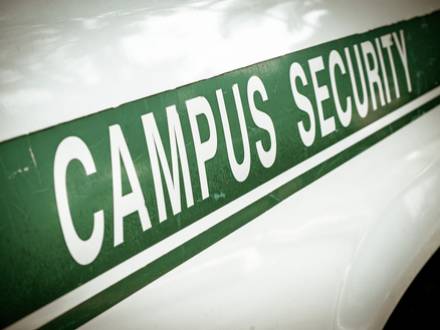
University of Tennessee campus security officers may have the authority to detain and search students in certain situations. However, the extent of that authority depends on whether they are acting as law enforcement or as university officials. UT police officers are sworn law enforcement officers and are bound by the Fourth Amendment just like any other police department. Security staff who are not sworn officers might operate under different rules.
Under Tennessee law and university policy, UT also has the right to conduct searches of university-owned property, including dorm rooms, under certain circumstances. It is worth understanding the difference between a university-initiated search and a police search, because the legal standards and consequences can differ.
What Happens if Your Rights Were Violated During a Search?
When police conduct an illegal search and seizure, the evidence found may be subject to suppression. Suppression means the court throws out the evidence, and it cannot be used against you at trial. This is known as the exclusionary rule, which derives from the Fourth Amendment and has been applied in landmark cases, such as Mapp v. Ohio.
In Tennessee, the exclusionary rule is also reinforced by state law. Under Tennessee law, searches and seizures must be conducted in accordance with constitutional requirements. Evidence obtained in violation of those requirements can be challenged in court. If the key evidence in your case was found during an unlawful search, suppressing it can significantly weaken or even end the prosecution's case against you.
Schedule a Free Consultation With Our Knox County Criminal Defense Lawyer
Your constitutional rights matter, and Jeffrey Coller, Knoxville Criminal Defense Attorney can help you when they are violated. Our Union County, TN criminal defense attorney has over 10 years of experience defending clients facing criminal charges in Tennessee. This includes cases where the legality of a search is at the center of the defense. Call 865-281-1000 to schedule a free consultation and discuss what happened in your case.
Arrested? Call Coller.
Jeffrey Coller, Knoxville Criminal Defense Attorney
Knoxville Office
First Horizon Plaza
800 S. Gay Street, Suite 2000
Knoxville, TN 37929P865-281-1000
 Map & Directions
Jacksboro Office
105 Church Alley
Jacksboro, TN 37757P865-281-1000
Map & Directions
Follow Us


 The use of the Internet or this form for communication with the firm or any individual member of the firm does not establish an attorney-client relationship. Confidential or time-sensitive information should not be sent through this form.
I have read and understand the Disclaimer and Privacy Policy.

Results listed are not a guarantee or indication of future case results.